
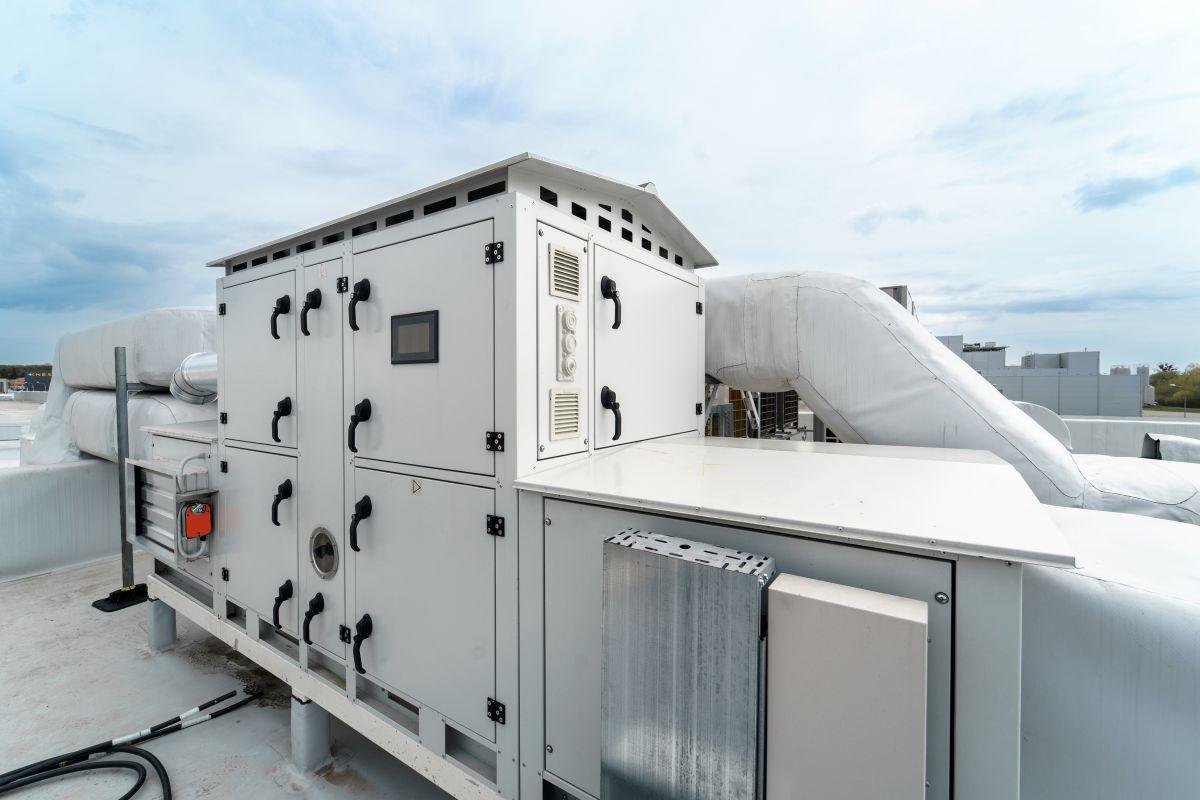
10 Elements a Commercial HVAC Maintenance Plan Needs
Key Points
- A commercial HVAC maintenance plan should include ten core elements: filter replacement, coil cleaning, refrigerant charge checks, belt and bearing inspections, electrical component testing, control system calibration, ductwork and airflow verification, documented seasonal changeover, performance testing, and service reporting with cost tracking
- Skipping any single element rarely causes an immediate failure. The risk comes from small gaps compounding over time into reduced efficiency, shortened equipment life, or an unplanned breakdown
- Maintenance plans should be tailored to building type and system complexity. A school, an office building, and an industrial facility all carry different priorities and risk points
- Documentation matters as much as the technical work. Service reports and cost tracking turn individual visits into a real maintenance history that supports budgeting and capital planning
- Not every plan on the market covers all ten elements. Facility managers should audit their current plan or provider against this list to find any gaps
Every commercial building depends on its HVAC system more than most facility managers realize, until something goes wrong. A rooftop unit fails during a heat wave. A boiler stops mid-winter. A tenant complaint about air quality turns into a compliance issue. In nearly every case, the root cause traces back to the same problem: commercial HVAC maintenance plans that look complete on paper but skip the details that actually prevent failure.
Not all maintenance plans are built the same. Some cover the basics and stop there. Others are structured to catch small issues before they become expensive ones, protect energy efficiency, and keep a commercial HVAC system running at the level it was designed for. The difference often isn’t visible until a neglected HVAC system breaks down at the worst possible time.
This guide breaks down the ten elements every serious commercial HVAC maintenance plan should include, why each one matters, and what tends to happen when it gets left out. Whether you manage a single building or oversee HVAC equipment across multiple properties, this is the standard to hold your current plan, or your provider, against.
What Belongs in Commercial HVAC Maintenance Plans
The following ten elements represent the core of a maintenance plan built to actually protect a building’s HVAC investment, not just check boxes on a service agreement.
1. Scheduled Filter Replacement
Filter replacement is the most basic item on this list, and also the one most likely to get skipped once a maintenance plan becomes “just a filter swap” in practice rather than a documented, scheduled maintenance task. Dirty filters restrict airflow, which forces the entire system to work harder to move air through the building. Over time, that strain drives up energy use, accelerates wear on air conditioning components, and reduces indoor air quality for everyone in the building.
A complete filter replacement task should include more than just swapping the filter itself. It should confirm:
- The correct filter type and MERV rating for the equipment and space
- A replacement schedule based on building use, not a generic calendar default
- Visual inspection of the filter housing and seal for gaps or bypass
- Documentation of the replacement date for the equipment’s service history
Regular air filter replacement schedules vary by facility. A school with high occupancy and seasonal shutdowns needs a different cadence than a manufacturing facility running production lines around the clock. Healthcare and lab environments may require monthly changes with high-MERV filters to maintain indoor air quality standards, while a lightly occupied office might reasonably stretch to a quarterly interval.
What tends to get missed is the compounding effect. A single missed filter change rarely causes a breakdown on its own. But when filter changes are consistently delayed across a building’s full HVAC asset inventory, the restricted airflow adds strain to blower motors, reduces cooling capacity, and shortens the life of components that are far more expensive to replace than a filter. What starts as a small, overlooked task becomes a driver of costly repairs months or years down the line.
A commercial HVAC maintenance plan should treat filter replacement as a tracked, verifiable task, not an assumption. If your current plan does not document filter changes with dates and technician sign-off, that is a gap worth flagging.
2. Coil Cleaning for HVAC Equipment
Evaporator and condenser coils are where the actual heat exchange happens in a commercial HVAC system. Evaporator coils absorb heat from inside the building, and condenser coils release that heat outdoors. When either set of coils is coated in dust, grease, or debris, they lose their ability to transfer heat efficiently, and the system has to run longer and harder to hit the same setpoint.
This is one of the areas where commercial HVAC equipment shows the clearest link between neglect and cost. A dirty coil does not just waste energy. It raises head pressure, increases compressor strain, and can shorten the life of a component that is expensive and disruptive to replace.
Coil cleaning should be treated as its own line item in any maintenance plan, not folded into a general “system check.” A complete coil cleaning task typically includes:
| Task | Why It Matters |
| Visual inspection for dirt, debris, or biological growth | Identifies buildup before it fully blocks airflow |
| Cleaning with an appropriate, non-acidic coil cleaner | Removes buildup without damaging fins |
| Fin straightening where bent or crushed | Restores proper airflow across the coil surface |
| Drain pan and condensate line check | Prevents standing water and microbial growth |
Facilities in dusty environments, near construction, or with high outdoor air intake tend to need more frequent coil cleaning than a standard annual schedule. Kitchens and food service spaces are a common exception too, since grease-laden air can coat coils far faster than typical office conditions.
Skipping coil cleaning rarely causes an immediate failure. What it does is quietly erode system efficiency over months, often without an obvious symptom other than a creeping utility bill and a system that seems to run constantly without ever quite catching up. By the time comfort complaints start, the coils have usually been restricting airflow for a while, and the fix costs more in both cleaning and lost efficiency than it would have if it had stayed on schedule.
Proper maintenance of coils is one of the more direct ways to protect both energy efficiency and equipment longevity at the same time, which makes it one of the higher-value items on this list relative to its cost.
3. Refrigerant Charge Checks on Commercial HVAC Systems
Refrigerant is what makes the cooling cycle possible. It absorbs heat indoors and releases it outdoors, cycling between the indoor and outdoor units as it changes state. When refrigerant charge is too low or too high, the whole system loses efficiency, and in more serious cases, it can lead to compressor damage that is far more expensive than the fix would have been if caught early.
Many commercial HVAC systems run for years without an obvious refrigerant problem, right up until a slow leak finally drops the charge low enough to affect performance. That is what makes charge checks a preventative task rather than a reactive one. Waiting for a comfort complaint or a spike in refrigerant pressure readings usually means the system has already been operating under strain for a while.
A proper refrigerant check should include:
- Measuring refrigerant charge against manufacturer specifications
- Testing for leaks at fittings, coils, and line connections
- Inspecting insulation on refrigerant lines running between outdoor units and indoor equipment
- Documenting pressure readings to establish a baseline for future comparison
It is worth noting that refrigerant work is not a task for general maintenance staff. Handling refrigerant legally requires EPA-certified, qualified technicians, and improperly topping off a system without addressing the underlying leak is both a compliance issue and a temporary fix that will need to be repeated, at a cost, again and again.
For buildings still running older systems on legacy refrigerants, a maintenance plan should also flag when it makes more financial sense to plan for a system upgrade rather than continuing to service equipment that is becoming harder and more expensive to support. This is one of the more common blind spots in facility budgeting. A charge check that surfaces a declining trend over several years gives a facility manager time to plan for system replacement on their own terms, rather than reacting to a full equipment failure during peak season.
Refrigerant checks are also one of the clearest examples of how routine inspection work helps prevent costly breakdowns. A single-degree pressure deviation caught in spring costs a fraction of what a mid-summer compressor failure does, both in repair cost and in the operational disruption of losing cooling capacity when a building needs it most.
4. Belt and Bearing Inspections
Belt-driven fans and blowers are the workhorses in many commercial HVAC setups, and their condition has a direct effect on airflow and system reliability. Belts wear down over time. They crack, glaze, or fray, and when that happens, they slip on the pulley instead of transferring power the way they should. Bearings wear too, often quietly, until the added friction starts generating heat and noise that signal a bigger problem forming.
This is an area where a quick visual check during a routine visit is not enough. Regular inspections should confirm both condition and tension, since a belt that looks fine can still be improperly adjusted in a way that strains the motor.
A thorough belt and bearing inspection typically checks:
- Visible cracking, fraying, or glazing on belt surfaces
- Proper tension, measured against manufacturer specification rather than by feel alone
- Pulley alignment, since misalignment accelerates uneven belt wear
- Bearing play or wobble when the shaft is gently tested by hand
- Unusual noise, such as grinding, squealing, or knocking during operation
Skipping this item does not usually cause an immediate failure either, which is part of why it gets deprioritized. But a loose or worn belt reduces proper airflow across the coil, which lowers cooling and heating capacity even while the rest of the system appears to be running normally. Left unaddressed, that reduced airflow puts extra strain on the motor and bearings, which can eventually lead to a full mechanical failure that takes the unit offline entirely.
Belt and bearing inspections are inexpensive relative to almost everything else on this list, and they are one of the more reliable ways to catch a developing issue before it becomes a service call. A well maintained system with belts replaced proactively, rather than after they fail, avoids both the unplanned downtime and the secondary wear that a snapped belt or seized bearing can cause to surrounding components.
Any HVAC maintenance program that only checks belts when a fan sounds off, rather than on a fixed inspection interval, is leaving a low-cost, high-value task on the table. This is a case where a few minutes of routine inspection consistently outperforms waiting for a symptom.
5. Electrical Component Testing to Avoid Costly Downtime
Electrical components carry more of the reliability burden than most facility managers give them credit for. Contactors, capacitors, relays, and terminal connections keep every other part of the system running, and when they degrade, the failure often shows up somewhere else first, a compressor that will not start, a motor that trips repeatedly, or a unit that cycles on and off without settling into normal operation.
Loose or corroded electrical connections generate heat. That heat degrades wire insulation over time, which creates both a performance problem and a genuine safety hazard. In a commercial building running multiple rooftop or split systems, a single failing electrical component can take a unit offline at the worst possible moment, whether that is the first heat wave of the season or the coldest week of winter.
A complete electrical inspection should verify:
- Tightness and condition of all wiring terminals and connections
- Capacitor condition, since these components have a defined lifespan and tend to fail without much warning
- Amperage and voltage readings against manufacturer specification
- Contactor condition, checking for pitting, scorching, or arcing
This is one of the clearest examples of how a small, inexpensive fix prevents a much larger one. Replacing a weak capacitor or a worn contactor during a scheduled visit costs very little. Waiting for that same component to fail completely, often during high-demand conditions when the system is working hardest, tends to prevent costly emergency repairs from ever happening in the first place, since the failure point never gets the chance to cascade into compressor or motor damage.
Emergency repairs on electrical failures also tend to come with longer wait times, since they usually happen during the exact periods when every HVAC contractor in the area is already stretched thin. A maintenance plan that includes electrical testing as a standard item, rather than something checked only when a unit is already acting up, keeps small issues from becoming the kind of failure that shuts a system down entirely and disrupts a building’s proper operation for days rather than hours.
6. Control System Calibration for System Performance
A commercial HVAC system can have clean coils, correct refrigerant charge, and healthy belts, and still underperform if the controls telling it what to do are inaccurate. Thermostats, sensors, and building automation interfaces are the layer that translates a facility’s comfort needs into actual equipment operation. When that layer drifts out of calibration, everything downstream gets less efficient, even though the mechanical equipment itself is working exactly as it should.
A single degree of thermostat miscalibration does not sound significant, but across a full building running continuously, it adds up to meaningful energy waste. In buildings with multiple zones, an uncalibrated control can also create the frustrating scenario where one overcooled space forces the entire system to keep running longer than necessary just to satisfy a single sensor.
Control system calibration should include:
- Verifying thermostat and sensor accuracy against a calibrated reference
- Testing zone controls and confirming they respond correctly to setpoint changes
- Reviewing building automation system alerts, overrides, and scheduling logic
- Confirming occupancy sensors and time-of-day setbacks are functioning as programmed
Facility managers often assume that once a control system is programmed, it stays accurate indefinitely. In practice, sensors drift, staff override settings for one-time events and never reset them, and BAS logic can accumulate small inconsistencies over years of adjustments by different technicians. None of this shows up as an obvious failure. It shows up as a system that runs more than it should, without ever quite feeling right.
Calibration is one of the lower-cost items on this list to correct, and one of the more overlooked. A properly calibrated control system keeps equipment operating at its optimal performance range rather than compensating for inaccurate readings, which supports both comfort and energy efficiency without requiring any change to the mechanical equipment itself. For facilities aiming for peak performance across a full HVAC asset inventory, control calibration is where a lot of quiet, unnecessary energy waste gets found and corrected.
7. Ductwork and Airflow Verification
Ductwork rarely gets the same attention as the mechanical equipment it connects to, even though it is responsible for actually delivering conditioned air to the spaces that need it. Leaky, disconnected, or poorly sealed ducts can lose a significant percentage of conditioned air before it ever reaches a register, which means the system is working to heat or cool air that never does its job.
This is a common gap in commercial HVAC preventative maintenance programs, largely because ductwork is often hidden above ceilings or behind walls, making it easy to overlook until airflow problems become obvious at the vent level. A thorough plan treats ductwork inspection as a standard task, not something addressed only during a renovation or tenant buildout.
A complete ductwork and airflow check typically covers:
| Task | What It Catches |
| Visual inspection of accessible joints and connections | Gaps, disconnections, and damaged insulation |
| Static pressure testing at key points in the system | Restrictions that force the system to work harder |
| Airflow measurement at registers and diffusers | Uneven air distribution across a space |
| Damper and economizer function check | Improper mixing of outdoor and return air |
| Proper drainage check on condensate lines | Standing water, microbial growth, and drain pan overflow |
Sealing visible leaks at joints and connections is often the highest-value fix, since these points tend to account for the largest share of air loss. Older buildings with a history of renovations are especially prone to duct damage from settling, vibration, and modifications made without resealing properly afterward.
The goal of this task is straightforward: ensure proper airflow is reaching every conditioned space at the volume the system was designed to deliver. When that airflow is restricted or lost along the way, the mechanical equipment upstream has to compensate, which drives up energy use and can mask a problem that would otherwise be an easy, low-cost repair. A plan that verifies airflow on a scheduled basis, rather than waiting for a comfort complaint, is one that actually protects both efficiency and air quality across the building rather than treating ductwork as an afterthought.
8. Documented Seasonal Changeover Procedures
Commercial buildings ask very different things of their HVAC systems depending on the season. Cooling systems carry the load in summer, commercial heating components take over in winter, and the transition between the two is when a lot of preventable problems tend to surface. A maintenance plan that treats seasonal changeover as a documented procedure, rather than something that happens informally when the weather shifts, catches issues before they turn into potential system failures during the exact weeks when the building needs full capacity.
Seasonal changeover should be a scheduled maintenance visit in its own right, not folded quietly into whatever other service happens to be occurring nearby. A documented changeover typically includes:
- Testing heating components before the first cold snap, including ignition systems, heat exchangers, and burners
- Testing cooling components before the first sustained heat, including condensers and economizer function
- Verifying defrost cycles on heat pump systems ahead of winter operation
- Reviewing thermostat schedules and setpoints for the upcoming season
- Confirming humidification or dehumidification equipment is functioning correctly for the season ahead
The value of documentation here goes beyond a simple checklist. Written changeover records create a history that shows what was tested, what was found, and what was corrected, which matters both for warranty compliance and for spotting a pattern of recurring issues that a single seasonal snapshot would miss. A component that needed adjustment three winters in a row is telling a facility manager something a one-time inspection never would.
Skipping a formal changeover does not always cause an immediate problem. Systems that were running fine in cooling mode often start in heating mode without issue too, most of the time. But system failures during a changeover tend to happen at the worst possible point, right as demand shifts and the system is asked to perform in a mode it has not run in for months. A documented changeover procedure, built into commercial HVAC maintenance plans as a standing task rather than an afterthought, is one of the more effective ways to extend equipment life and avoid a shutdown at the start of a new season.
9. Performance Testing to Improve Energy Efficiency
Most of the items on this list are about keeping equipment running. Performance testing answers a different question: is the system running as well as it should be. A unit can be operating without any obvious fault and still be delivering a fraction of its rated capacity, quietly costing a building money every month without ever triggering a service call.
Performance testing goes beyond a basic inspection by actually measuring how the HVAC system is performing against its original specifications. A complete performance test typically includes:
- Temperature differential readings across the coil
- Airflow verification at the unit and at individual registers
- Motor amperage and voltage readings compared to rated values
- Refrigerant pressure analysis under actual operating conditions
- Static pressure measurements to confirm the system is not fighting unnecessary resistance
This is one of the more data-driven items on the list, and one that pays for itself in decision-making value. A facility manager who has baseline performance numbers from a system’s first year can compare annual maintenance results against that baseline and see, in concrete terms, whether efficiency is holding steady or declining. That kind of documentation turns a vague sense that “the system seems less efficient” into an actual number that supports a repair, a budget request, or a replacement decision.
Facilities that skip performance testing tend to rely on utility bills as their only signal, which is a lagging and imprecise indicator. By the time a bill increase is noticeable enough to investigate, the system has often been underperforming for a while, and the fix costs more than it would have if caught during a routine test.
Regular preventive maintenance that includes performance testing does more than catch mechanical issues. It gives a building the data it needs to genuinely improve energy efficiency over time, rather than assuming that a system running without complaints is automatically running well. For buildings tracking high energy efficiency as a real operational goal rather than an aspiration, performance testing is what turns that goal into something measurable.
10. Service Reporting and Maintenance Costs Tracking
The final element on this list is not a mechanical task at all, it is documentation, and it is often the single biggest differentiator between a maintenance plan that actually protects a building and one that just checks boxes. Every visit should produce a clear, written record of what was inspected, what was found, what was corrected, and what needs attention going forward.
A useful service report should include:
- Work completed during the visit, itemized by task
- Equipment condition notes, including any component approaching the end of its expected life
- Recommended repairs, separated into urgent and non-urgent categories
- Photos where relevant, particularly for issues that are hard to describe in writing
- Updated maintenance costs for the visit, tracked against the building’s maintenance budget
This kind of documentation does more than create a paper trail. Over time, it builds a real maintenance history for every piece of equipment in a commercial space, which makes it possible to spot patterns, plan capital expenditures before a system fails outright, and hold a maintenance program accountable to what it actually delivers versus what it promises on paper.
Cost tracking matters just as much as the technical record. Facility managers who can see itemized maintenance costs over several years are in a much stronger position to budget accurately, justify air conditioning replacement decisions with real data, and identify when a piece of equipment has crossed the point where repair costs no longer make sense relative to its remaining equipment life.
Routine maintenance without reporting is difficult to verify and even harder to improve. A technician can perform every task correctly, but if there is no record of it, a facility manager has no way to confirm the work happened, no way to track trends, and no leverage when it comes time to negotiate a service contract or make the case for a larger capital investment. Documentation turns a maintenance plan from a series of individual visits into a genuine asset management tool.
Tailoring Commercial HVAC Plans to Building Type and Complexity
No two buildings put the same demands on their HVAC equipment, which means a generic, one-size-fits-all maintenance plan almost always underperforms for at least part of a facility’s portfolio. The ten elements above apply broadly, but how often each one gets performed, and how much weight it carries, should shift based on what the building actually is and how it operates.
A few examples make the difference clear:
| Building Type | Maintenance Priority | Why It Matters More Here |
| Schools | Filter changes, IAQ monitoring, seasonal changeover | High occupancy swings, seasonal shutdowns, child health sensitivity |
| Office buildings | Control calibration, zone balancing, thermostat scheduling | Multiple tenants, varied schedules, comfort complaints drive most service calls |
| Industrial and manufacturing | Belt and bearing inspection, electrical components, heat exchangers | Continuous operation, production lines dependent on uninterrupted conditioning |
| Cannabis and grow room facilities | Humidity control, dehumidification equipment, airflow balancing | Tight environmental tolerances where a small deviation affects the product |
| Healthcare and lab spaces | Air filter changes, IAQ standards, ventilation rate compliance | Regulatory requirements and occupant health sensitivity |
System complexity matters just as much as building type. A small retail space running a single outdoor unit has a straightforward maintenance footprint. A hospital or a multi-building campus running chillers, boilers, multiple air handlers, and a building automation system layered on top has a fundamentally different scope, and a fundamentally different level of risk if any single component is neglected.
This is where preventative HVAC maintenance plans often fall short. Many are built around a standard service checklist that gets applied uniformly across every property in a portfolio, regardless of what each building actually needs. A plan that treats a school gymnasium and a data center the same way is not really tailored at all, it is a generic template with the building name changed.
A properly tailored plan starts with an honest inventory of a facility’s equipment, occupancy patterns, operating hours, and any industry-specific compliance requirements. From there, task frequency and priority should be adjusted accordingly. HVAC preventative maintenance built this way costs more to design upfront, but it consistently outperforms a generic plan on both reliability and long-term cost, because it puts attention where the building’s actual risk lives instead of spreading effort evenly across items that may not carry equal weight for that specific space.
Does Your Current HVAC Maintenance Plan Cover All 10 Elements?
Most facility managers already have some form of maintenance in place. The harder question is whether that plan actually covers the ground it needs to, or whether it has quietly narrowed down to a handful of routine tasks over time while other elements fell off the schedule without anyone noticing.
Use the list below as a straightforward audit. For each element, ask whether your current HVAC maintenance plan, whether managed in-house or through an outside provider, genuinely includes it as a documented, scheduled task rather than something addressed only when a problem comes up.
- Is filter replacement scheduled by building need, not just a generic calendar default
- Are coils cleaned on a set schedule, with condition documented at each visit
- Is refrigerant charge checked and logged, with leak testing rather than simple top-offs
- Are belts and bearings inspected for tension, alignment, and wear at every visit
- Are electrical connections and components tested, not just visually glanced at
- Is the control system calibrated on a recurring basis, not assumed accurate indefinitely
- Is ductwork and airflow verified periodically, not only addressed during renovations
- Is seasonal changeover a documented procedure with its own checklist
- Is performance testing part of the plan, with baseline data tracked over time
- Do you receive itemized service reports with cost tracking after every visit
A maintenance program that only covers four or five of these consistently is not necessarily a bad plan, but it is an incomplete one, and the gaps tend to be exactly the items that are least visible day to day: control calibration, performance testing, and documented reporting. These are also, not coincidentally, the items most likely to prevent potential system failures and unplanned system replacement decisions down the road.
If a current provider cannot clearly explain which of these ten elements are included in a service agreement, that is worth a direct conversation. A well maintained system depends on consistency across all ten areas, not strength in a few of them. Facility managers who take the time to compare their current plan against this list often find the gap is not in effort, it is in scope, and closing that gap is usually less about spending more and more about making sure the right tasks are actually happening on schedule.
Build a Commercial HVAC Maintenance Plan That Works
At HC Nye, maintenance planning starts from an engineering perspective rather than a sales one, built around what a specific facility’s equipment and operations actually require. For facility managers evaluating whether their current plan holds up against the ten elements outlined here, HC Nye can help assess where the gaps are.